Newsroom

Brands News Category Archive

hospitality Brands

Brands Jul 03, 2026

Wyndham Adds Four Choctaw Nation Casino Resorts in Oklahoma Gaming Push

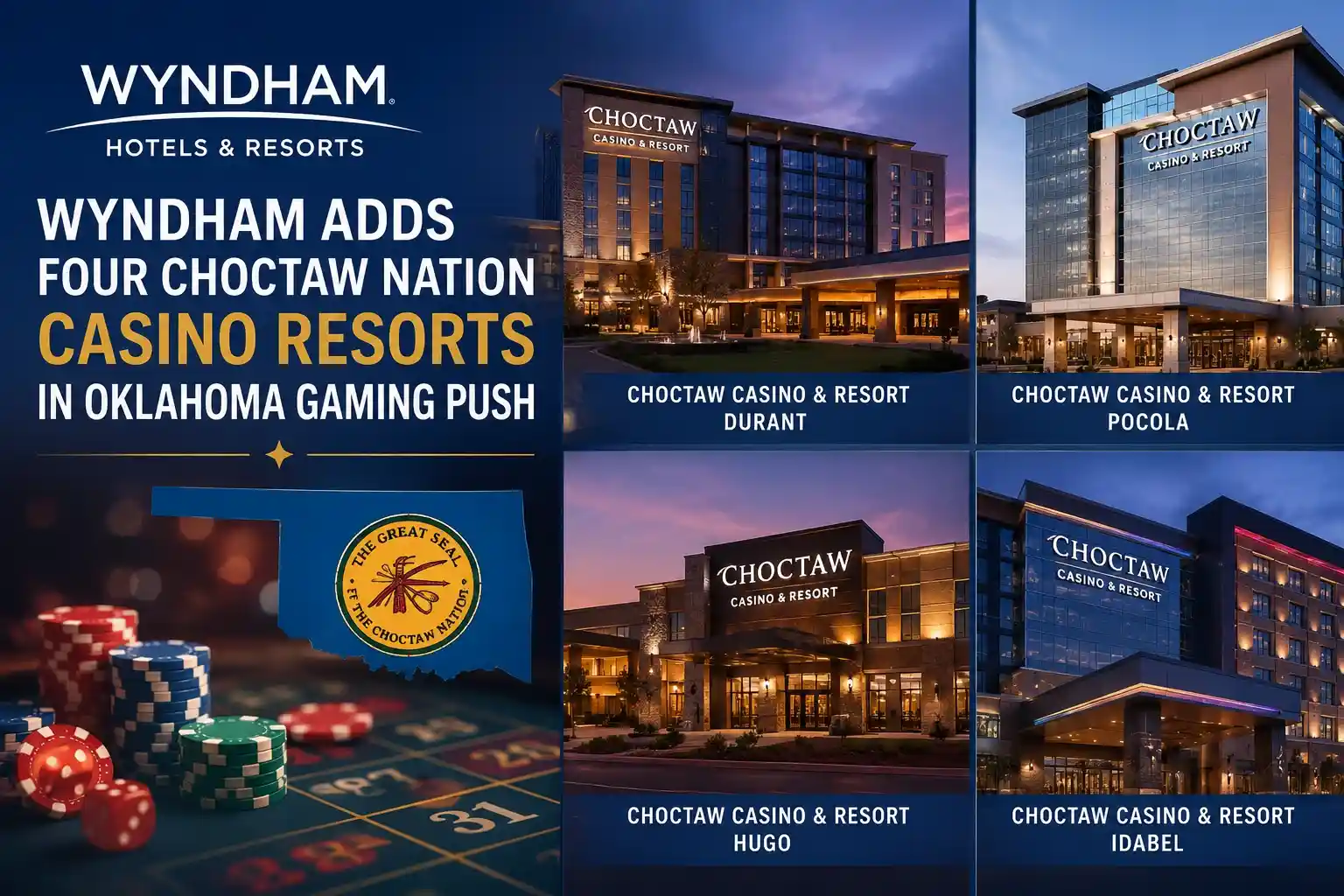
Wyndham Hotels & Resorts picked an unusual way to kick off its year: a deal with a Native American tribal government that hands the Parsippany, New Jersey-based company its biggest single push yet into casino resort hospitality. The agreement, announced January 22, brings four Choctaw Casino & Resorts properties in Oklahoma into Wyndham's system, representing nearly 2,000 rooms across the state.The flagship of the deal is Choctaw Casino & Resort in Durant, which the Choctaw Nation bills as one of the largest casino resorts in the country. That property is joining Wyndham Grand, the company's upscale flag typically reserved for larger, full-service resorts and convention-oriented hotels. The other three properties — in Hochatown, Pocola and Grant — are joining Trademark Collection by Wyndham, a soft brand built for independent hotels that want loyalty and distribution benefits without giving up their existing identity and name.Importantly, this isn't a management takeover. The Choctaw Nation continues to own and operate all four resorts. What Wyndham is providing is essentially the commercial back end: its reservations system, its Wyndham Rewards loyalty program, and its sales and marketing infrastructure. Trade coverage from GGB Magazine, which covers the gaming industry specifically, and Indian Gaming both framed the arrangement as a distribution play rather than an operational one — the kind of deal that lets a large, well-run tribal gaming operation extend its reach without handing over day-to-day control to an outside hotel company.Geoff Ballotti, Wyndham's president and chief executive, leaned into that framing when the deal was announced. "This aspirational affiliation represents everything today's travelers are asking for, exciting destinations, distinctive experiences, and more meaningful ways to connect with the places they love," Ballotti said. "By welcoming Choctaw's remarkable casinos and resorts to Wyndham, we're expanding what our brands and our Wyndham Rewards program can offer, giving more than 120 million enrolled members access to a powerful new collection of entertainment-driven getaways across one of the country's fastest-growing gaming markets."That figure — 120 million enrolled Wyndham Rewards members — helps explain why a deal like this matters more than its four-property size might suggest. Wyndham has built its reputation primarily on economy and midscale roadside brands: Days Inn, Super 8, Ramada, Howard Johnson. Casino resorts, with their higher room rates, entertainment programming and food and beverage revenue, sit well outside that traditional core. Landing a flagship property the size of the Durant resort gives Wyndham Rewards members a genuinely upscale, destination-driven redemption option, while giving the Choctaw Nation access to a loyalty base far larger than what any standalone regional casino brand could build on its own.Oklahoma's gaming market has grown fast over the past decade, driven in large part by tribal gaming compacts that have allowed nations like the Choctaw, Chickasaw and Cherokee to build out increasingly ambitious resort properties. The Choctaw Nation in particular has invested heavily in Durant, expanding what began as a more modest casino into a resort complex with hotel towers, entertainment venues and convention space aimed at pulling visitors from the Dallas-Fort Worth metro area, roughly 90 minutes south. Attaching a Wyndham Grand flag to that property signals an ambition to compete for a broader, more national travel audience rather than relying solely on regional drive-in gaming traffic.The three smaller properties joining Trademark Collection tell a slightly different story. Trademark is Wyndham's catch-all soft brand for hotels that don't fit neatly into an existing flag but still want the benefits of the Wyndham system — reservations, loyalty, distribution — without a full rebrand. That makes it a natural fit for regional casino resorts in Hochatown, Pocola and Grant, properties that likely have loyal local followings but limited ability to market themselves nationally on their own.This deal also fits a broader pattern among the major hotel companies, all of which have been racing to build relationships with tribal gaming operators and other non-traditional resort owners over the past couple of years. Choice Hotels, Best Western and others have pursued similar soft-brand and loyalty-affiliation deals with casino properties, recognizing that gaming resorts bring built-in demand, strong ancillary revenue and, increasingly, a willingness to pay for the marketing reach that a global loyalty program provides. For Wyndham specifically, which has spent the past couple of years fending off and then abandoning a contentious, years-long acquisition pursuit of Choice Hotels, deals like the Choctaw agreement represent organic growth that doesn't require the regulatory and shareholder fights that come with a large corporate combination.The financial terms of the Choctaw agreement were not disclosed, which is typical for hotel franchise and affiliation deals of this kind. What is clear is the strategic logic: Wyndham gets a marquee upscale property to point to when it talks about brand elevation, plus a meaningful expansion of its footprint in a gaming market that keeps growing. The Choctaw Nation gets access to a global distribution and loyalty system without giving up ownership or operational control of resorts it has spent years building.Whether other tribal nations follow the Choctaw Nation's lead in aligning with a major hotel company will likely depend on how this partnership performs over its first year or two. Tribal gaming operators have historically been protective of their independence, and for good reason — sovereignty and self-determination are central to how many nations think about economic development. A deal that clearly preserves ownership and management control, while still delivering a measurable lift in bookings and loyalty engagement, could become a model other tribal gaming operations look at seriously. If it doesn't deliver that lift, Wyndham's push into casino resort hospitality may end up looking more opportunistic than transformative.
Read Story
Brands Jul 03, 2026

Marriott's Series Brand Lands in the US, Starting With Two Boutique FOUND Hotels

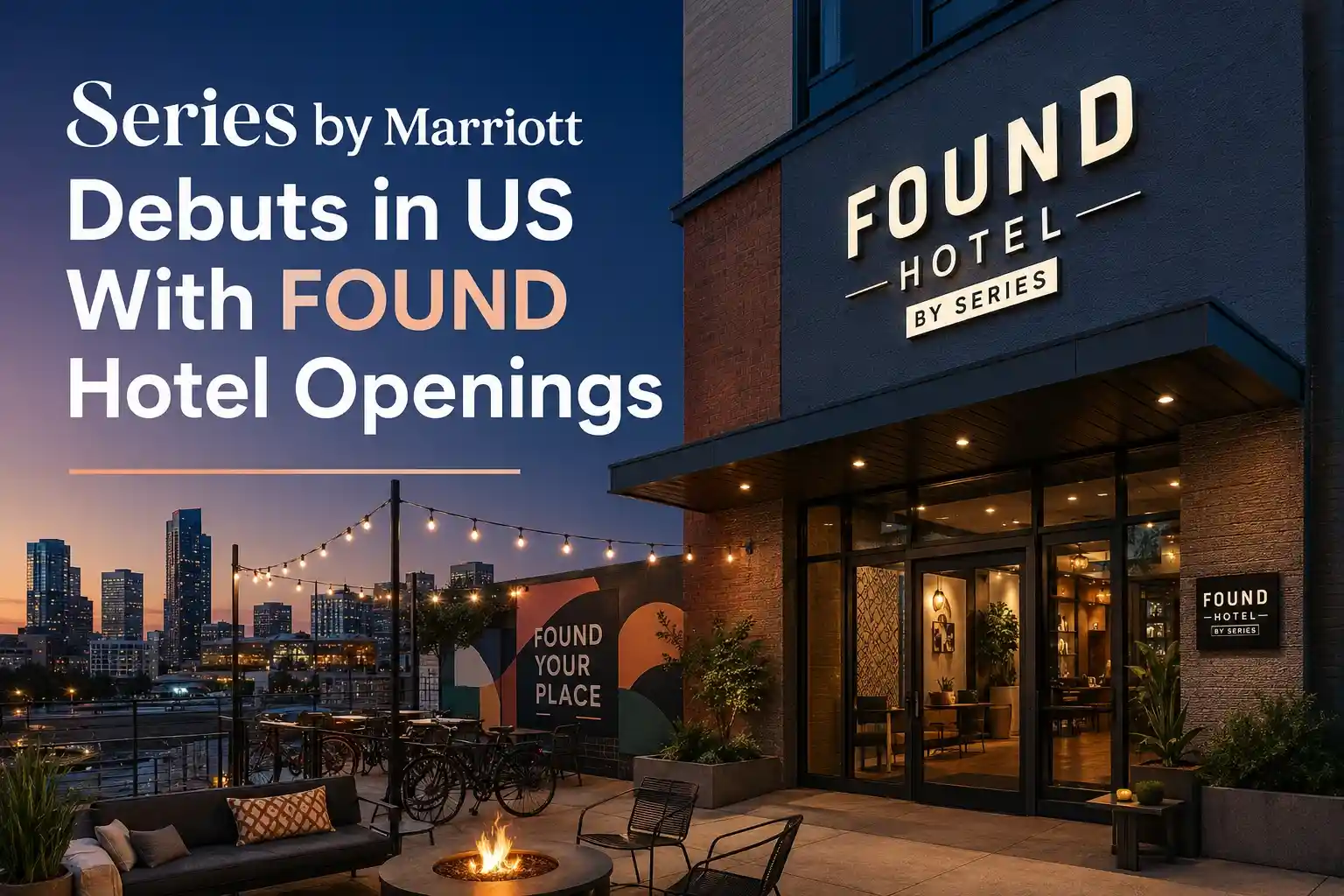
Marriott International's newest collection brand made its American debut late last year in about as unglamorous a fashion as a hotel launch can manage: two boutique properties in Miami Beach and Santa Monica quietly swapped their signage and started welcoming Bonvoy members. No ribbon-cutting spectacle, no splashy ad campaign. Just FOUND Miami Beach opening under the Series by Marriott flag on November 10, and FOUND Santa Monica following three days later on November 13.The brand itself isn't new globally — Marriott introduced Series by Marriott in May 2025, initially through a deal in India, positioning it as a way to bring "strong, regionally relevant brands and hotels into the Marriott portfolio" without forcing independent operators to give up what made them distinctive in the first place. The US expansion is the brand's first real test in Marriott's home market, and it's arriving through a partnership with Hawkins Way Capital, a Los Angeles-based hospitality investment firm that owns the FOUND Hotels boutique brand through its FCL Management affiliate.The deal, first announced in September 2025 according to a joint release from Marriott and Hawkins Way, covers five properties in total: Miami, Santa Monica, San Francisco, Chicago and San Diego. Two are open as of this writing. A third, the Best Western Plus Pepper Tree Inn in Santa Barbara, has already been converted into FOUND Hotels Santa Barbara, Series by Marriott, suggesting the pipeline is moving in stages rather than all at once.Ross Walker, managing partner at Hawkins Way Capital, described the arrangement as a way to plug into Marriott's infrastructure without losing what makes the FOUND properties distinct. "Our collaboration with Marriott is an exciting catalyst for Hawkins Way Capital and its FCL Management affiliate as we bolster our hospitality platform nationwide," Walker said when the five-property agreement was first announced.That balancing act — keeping local character while gaining big-brand scale — is really the whole premise behind Series by Marriott. Properties that join the brand keep their existing name and what Marriott calls their "localized personality," essentially operating as a soft-branded collection rather than being remade into a generic Marriott product. What changes is the back end: Bonvoy loyalty integration, access to Marriott's global sales and distribution network, and inclusion in Marriott's broader marketing engine. For a traveler booking FOUND Santa Monica, the experience at the property may look almost identical to before. But that stay now earns and can be booked with Bonvoy points, and it shows up in Marriott's app and website search results alongside the company's other 30-plus brands.For Hawkins Way, a firm that has built a reputation for turning around boutique and independent hotels, the appeal of a Marriott flag is straightforward: distribution. Independent and small-collection hotels can struggle to compete for visibility against companies that spend billions annually on loyalty programs and global sales teams. Joining Series by Marriott doesn't require Hawkins Way to abandon the boutique identity it built with FOUND — it just adds Marriott's reservation system and rewards program on top of it.Series joins a growing list of "soft brand" collections that major chains have built for exactly this purpose — Marriott already runs Autograph Collection, Tribute Portfolio and Design Hotels under a similar model, while Hilton has Curio Collection and Tapestry Collection, and Hyatt has its own array of unbranded partnerships. What differentiates Series, according to Marriott's own positioning, is a sharper focus on hotels with strong regional identity rather than purely upscale independent boutiques. The brand's first deal in India and now its US launch through Hawkins Way both fit that description: properties that had real local recognition before Marriott ever entered the picture.The conversion of the Best Western Plus Pepper Tree Inn into a FOUND-branded, Series by Marriott property is worth noting on its own. Best Western has spent recent years trying to push upmarket with acquisitions like WorldHotels and Sadot-adjacent soft brands, and losing a property to a Marriott collection brand is the kind of flag conversion that shows just how competitive the mid-and-upper segments of the US hotel market have become. Independent owners increasingly have their pick of major loyalty ecosystems to plug into, and that competition is pushing all the big players — Marriott, Hilton, Hyatt, IHG, Wyndham and Choice — to build or expand soft-brand collections that can absorb existing properties without a full renovation or rebuild.What happens over the next year will say a lot about how serious Marriott is about growing Series domestically. Two of five signed properties are open; three more are still in the pipeline, including markets — San Francisco, Chicago, San Diego — that would give the brand real coast-to-coast visibility rather than a coastal-boutique niche. If Marriott and Hawkins Way close out that pipeline on schedule, Series by Marriott could become a template other regional operators look to when they're deciding whether to stay independent or trade some autonomy for the reach that comes with a global loyalty program.For now, the story is a modest one: two hotels, two cities, and a brand still finding its footing in the US. But modest launches have a way of becoming case studies. Marriott has built entire brand families — Autograph Collection now numbers in the hundreds of properties worldwide — out of exactly this kind of slow, deal-by-deal start. Whether Series follows that trajectory will depend less on any single opening and more on whether independent owners like Hawkins Way keep deciding that a Marriott flag is worth more to them than staying fully on their own.

Read Story
Brands Jul 03, 2026

Hilton Goes to College: Undergraduate Brand Targets 400 Campus Towns

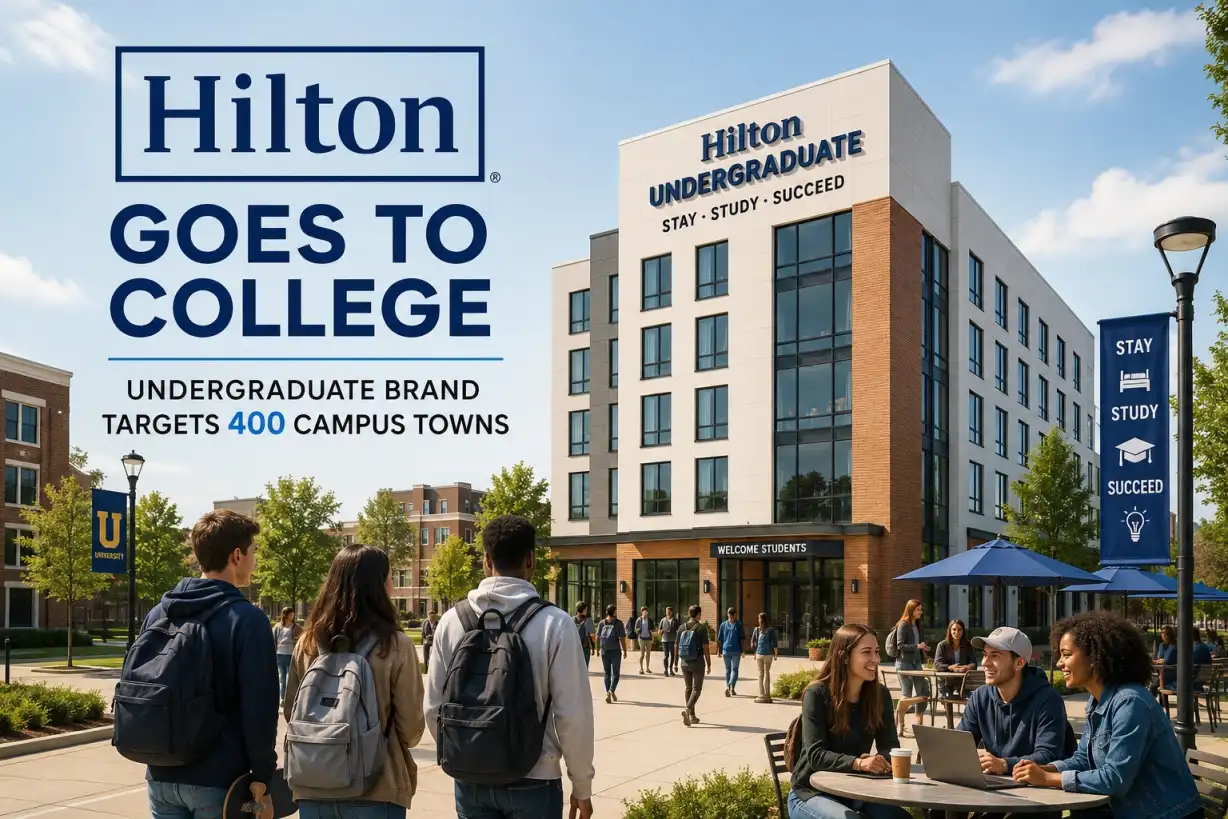
College towns have always had a hotel problem. Demand spikes hard around move-in weekend, homecoming, graduation and big football Saturdays, then goes quiet for long stretches in between. Most national hotel brands have treated that boom-bust rhythm as a reason to stay away, or at best to plant a standard limited-service property a few miles from campus and call it done. Hilton is now betting that the right brand, built specifically around that rhythm, can turn it into an advantage instead of a liability.The company announced Undergraduate by Hilton this spring, an upper-midscale brand aimed squarely at university markets. Hilton has pegged its long-term potential at 400 to 500 hotels, an ambitious number for a brand that hasn't opened its first property yet. That debut hotel is expected in 2027, according to Hilton's own announcement and coverage from Hotel Dive and Lodging Magazine.Chris Nassetta, Hilton's president and chief executive, framed the launch as both a growth play and a positioning move. "Undergraduate by Hilton unveils an exciting new era of college-town hospitality, expanding how we show up for campus-connected travelers – offering more stay options while supporting disciplined, long-term growth across our portfolio," Nassetta said in the company's announcement. He added that the idea grew out of a specific gap Hilton saw in its own map: "We saw a clear opportunity to bring the energy, design and experiences people love about campus communities to more university towns with this new brand."That gap sits between Hilton's existing Graduate by Hilton, an upper-upscale brand that has built a cult following for its campus-nostalgia design and now operates in more than 30 college markets, and the mainstream limited-service brands like Hampton or Hilton Garden Inn that could theoretically go anywhere. Undergraduate is meant to occupy the space in between: lifestyle-forward enough to feel distinct, but priced and built to work economically in smaller university towns that couldn't support a Graduate-tier project.Chris Silcock, Hilton's president of global brands and commercial services, tied the launch to a generational shift in what younger travelers expect from a hotel stay. "We're continuously evolving how we connect with the next generation of travelers by creating new ways to stay within the places that matter most to them," Silcock said. "With Undergraduate by Hilton, we're broadening the stay experiences we offer, pairing community-led experiences with the scale of Hilton's global platform to expand choice and deliver long-term value for owners."The design brief, as described in Hilton's release and picked up by outlets including Hospitality Design and Travel And Tour World, leans hard into the campus metaphor. Guest rooms are meant to evoke classrooms, complete with a dedicated study corner and extra storage space — useful, presumably, for parents dropping off or picking up students with a car full of belongings. Public areas are designed as lounges and library-style spaces meant to double as informal gathering spots for guests, locals and students alike, plus a barista-led market for coffee and quick food. Hilton describes the goal as making each property feel like "an always-on, off-campus hangout," a phrase that shows up across the brand's marketing materials.Just as important as the design is who Hilton expects to walk through the door. The brand isn't being built solely for parents on move-in weekend. Hilton's own materials list students, locals, alumni, sports fans, and business or conference travelers among the target guests, a mix meant to keep occupancy from collapsing the moment the academic calendar goes quiet. College towns that host Big Ten or SEC football, active alumni networks, or year-round conference and camp business are the kind of markets Hilton is describing when it talks about "consistent, year-round demand tied to tours, athletic weekends and campus gatherings."For developers, the pitch centers on flexibility. Undergraduate is designed to support both ground-up construction and conversions of existing buildings, which lowers the barrier to entry compared with a brand that only works as new construction. That matters in college towns, where good sites near campus are often already occupied by aging hotels, extended-stay properties or even off-campus housing that could, in theory, be repositioned. A conversion path lets Hilton move faster and lets owners avoid the cost and permitting headaches of a ground-up build.The timing lines up with a broader wave of brand fragmentation across the industry, something Hotel Dive and other trade outlets have tracked closely this year. Hilton alone has introduced or previewed several narrowly targeted brands in a short window — Apartment Collection for furnished, extended-stay units, Outset Collection for boutique upscale hotels, and now Undergraduate for university markets. Each is chasing a specific demand pattern that a generic limited-service brand can't fully capture, and each gives Hilton another flag to plant before a competitor gets there first.Whether Undergraduate hits anywhere near its stated ceiling of 400 to 500 hotels will hinge on how quickly Hilton can sign development deals and how convincingly the brand delivers on its lifestyle promise once the first property actually opens its doors in 2027. Brand launches are easy; filling a pipeline with real signed deals is the hard part, and Hilton has both succeeded (Home2 Suites, Tru) and moved more slowly than promised (some of its earlier lifestyle brands) on that front before.Still, the logic behind targeting college towns is hard to argue with. There are more than 4,000 degree-granting institutions in the U.S., many surrounded by towns that punch above their weight in event-driven travel demand but well below it in quality lodging supply. If Hilton can make the economics work in even a fraction of those markets, Undergraduate could end up being one of the more consequential brand launches of the year — not because of glossy design renderings, but because of the sheer number of towns that might finally get a hotel built specifically for how they actually fill rooms.

Read Story
Brands Jul 03, 2026

Hilton Bets on Apartments: Inside Its Placemakr Partnership and 26th Brand

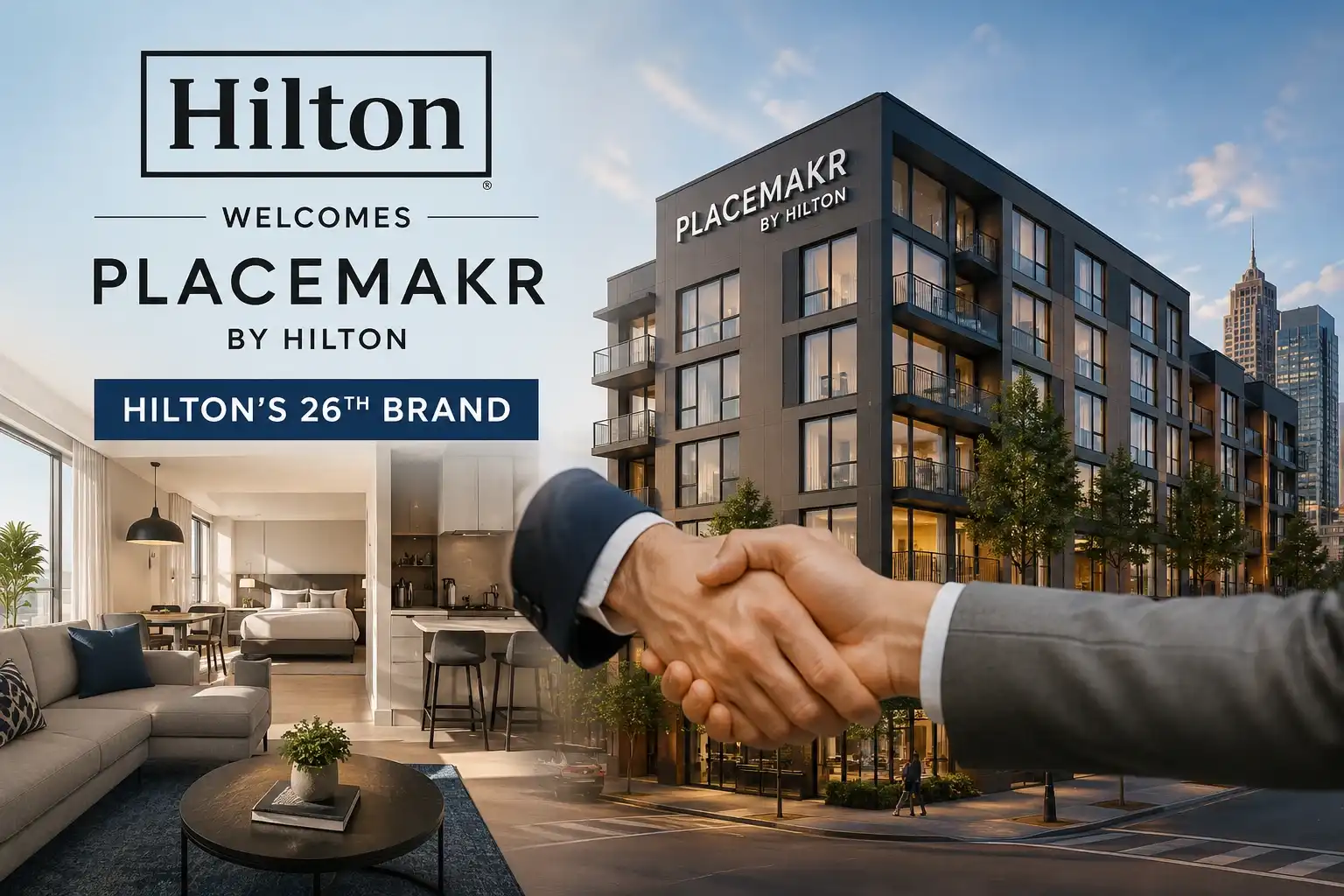
Hilton has never been shy about stacking new brands onto its roster, but the one it introduced this January looks different from anything in the portfolio. There's no swimming pool photo on the press release, no lobby bar, instead, Apartment Collection by Hilton leads with kitchens, laundry rooms and four-bedroom floor plans, a lineup that reads more like an apartment listing site than a hotel brochure.The brand, unveiled in mid-January, is the product of a partnership between Hilton and Placemakr, a Washington-based company that has spent the past several years building out furnished, apartment-style stays inside multifamily buildings. Together they're adding roughly 3,000 units to what Hilton already counts as 10,000 aparthotel-style rooms across its global system. Skift, which broke early details of the tie-up, tagged it as Hilton's 26th brand — a number that keeps climbing as the McLean, Virginia-based company chases every corner of the lodging market it hasn't already claimed.The first bookable properties are landing in three cities picked for a reason: New York, Washington and Atlanta all have deep pools of business travelers, relocating professionals and leisure visitors who want to stay a week or a month rather than a single night. Guests can book studios up through four-bedroom units, each with a separate living area and full kitchen. Public spaces vary by building but can include fitness centers, rooftop pools, communal work lounges and on-site dining or retail. Hilton says team members will be on-site around the clock, a detail meant to reassure travelers who might otherwise associate apartment-style stays with unstaffed short-term rentals.Jason Fudin, Placemakr's chief executive, has been talking up this segment for a while, and his comments on the Hilton deal frame it as validation rather than a one-off transaction. "We're also excited for what this means for our real estate partners," Fudin said."Hilton's industry-leading commercial engine and scale will help create even more value for our partners while accelerating our mission to maximize the value of real estate through flexibility. This marks a new chapter in flexible real estate, and we couldn't be more excited." He's also predicted that apartment-style accommodations will be "the fastest-growing category for the next decade"— a bold claim, but one that lines up with how much capital has flowed into extended-stay and flexible-living concepts over the past two years.What makes this deal notable isn't just the apartments themselves. It's the loyalty math. Every Apartment Collection stay books through Hilton.com and earns and redeems Hilton Honors points the same way a stay at a Hampton Inn or a Waldorf Astoria would. For a program with more than 200 million members worldwide, plugging thousands of new furnished units into that ecosystem is a meaningful expansion of what a Honors member can actually redeem points for for. It also gives Hilton a foothold in a category it has watched Marriott, through its Homes & Villas platform, and independent operators like Sonder and Mint House chip away at for years.The economics behind the deal matter for real estate owners too. Multifamily developers and owners have been sitting on buildings with soft lease-up periods or underused inventory, and the aparthotel model gives them a way to generate hotel-like revenue without fully converting to a hospitality operation. By attaching the Hilton name and, crucially, Hilton's distribution engine and commercial systems, those owners get access to a demand pipeline that an independent furnished-apartment operator can't easily replicate on its own. Placemakr brings the operational playbook; Hilton brings the reservations, the loyalty base and the brand recognition that shows up when someone searches for a place to stay in a new city.Industry coverage of the launch, including reporting from Hotel Dive and The Points Guy, has focused on how the move fits into a broader pattern at Hilton. Over roughly the past year, the company has rolled out or previewed several brands aimed at very specific slices of demand — Signia for larger convention-driven resorts, Outset Collection for boutique upscale properties, and, just months after the Apartment Collection debut, Undergraduate by Hilton for college towns. Each new brand narrows the target guest a little further, a strategy Hilton has defended publicly as a way to capture demand that would otherwise go to a competitor or an alternative accommodation platform.Whether Apartment Collection scales the way Fudin predicts will depend on how quickly Placemakr and Hilton can convert additional buildings and how travelers respond to booking an apartment through a hotel loyalty program rather than an app built for that purpose. The category has real momentum — remote work, relocation, and extended business trips haven't gone away — but it's also gotten crowded, with everyone from Airbnb's corporate travel push to boutique aparthotel brands fighting for the same guest.For now, the rollout is deliberately narrow. Three cities, thousands rather than tens of thousands of units, and a first-half-of-2026 timeline for full bookability. Hilton has a long history of starting brands small and scaling them into three- and four-digit portfolios — Home2 Suites and Tru by Hilton both followed that path. If Apartment Collection follows suit, the current New York, Washington and Atlanta properties will look like the opening chapter of something much bigger rather than the whole story.What's clear already is that the line between "hotel" and "apartment" keeps getting blurrier, and the big brand companies would rather own that blur than watch it happen around them. Hilton's move puts a familiar name and a loyalty program behind a category that, until now, mostly belonged to venture-backed startups and independent operators. That alone could reshape how quickly furnished, apartment-style stays go mainstream.

Read Story