
Deloitte's New Travel Report Has a Warning for Airlines and Hotels: The Road Warriors Are Slowing Down
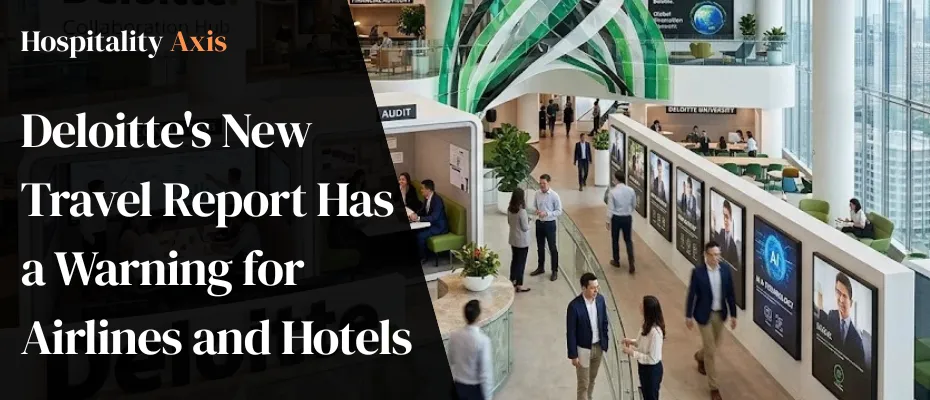
The travelers airlines and hotels have relied on most heavily to prop up premium revenue may be losing some of their frequent-flyer stamina.That's the takeaway from Deloitte's 2026 Travel Industry Outlook and the accompanying Corporate Traveler Survey data behind it, which point to a meaningful cooling among the road warriors who take ten or more business trips a year. According to the survey, 53% of these frequent corporate travelers said they expected to travel three or more times in a typical month in 2026, down from 63% who said the same heading into 2025. That's a ten-point drop in a single year among precisely the travelers whose habits matter most to airline and hotel bottom lines.The reason that particular statistic matters so much comes down to spending patterns. Frequent corporate travelers, like their higher-income leisure counterparts, are disproportionately likely to book premium seats, upgraded rooms and other higher-margin products. Deloitte's report warns that if this group pulls back even modestly on both trip frequency and premium spending in 2026, the travel categories that benefited most from post-pandemic upgrade behavior "may be particularly exposed."Airlines, in particular, have leaned hard into premium cabin sales over the past several years as a source of outsized margin growth, often outpacing growth in coach revenue. Deloitte's report suggests that momentum could soften or plateau in the year ahead, which would put more pressure on carriers to get sharper about targeting the right offer to the right flyer at the right moment rather than counting on broad-based upgrade demand to keep flowing in. The hotel side faces a parallel risk: midscale and upscale resorts and city hotels could see occupancy or rate erosion if higher-income and frequent business travelers become more deal-sensitive, shorten the length of their stays, or simply take fewer trips altogether.Behind the specific travel numbers sits a broader story about consumer psychology that Deloitte's researchers describe as a widening financial split among Americans. Financial pessimism, historically concentrated among lower- and middle-income households, has crept up into higher income brackets in a way that's more pronounced than in recent years. That's producing what the report calls a growing wealth bifurcation in how people plan and pay for trips, business and leisure alike. Even affluent, frequent travelers who have the means to keep booking premium options at their prior pace appear to be second-guessing whether they should.Harvey Chipkin, writing about the findings for Business Travel Executive, summarized the risk bluntly: corporate travel may be slowing down "among highly desirable road warriors," the exact segment that travel brands have spent years building loyalty programs and premium products specifically to retain. If that segment's travel cadence keeps drifting downward, the loyalty economics that airlines and hotel chains depend on to justify premium investment could come under real strain.None of this amounts to a wholesale collapse in business travel demand, and Deloitte's broader outlook doesn't read as bearish so much as cautious. Travel remains a clear spending priority for both companies and individual American travelers, according to the report. The concern Deloitte raises isn't that people will stop traveling for work altogether, but that the growth engine that has powered the post-pandemic recovery, driven substantially by high-frequency, high-spend travelers trading up to premium products, may be running out of room to keep accelerating at the same pace.That has real implications for how airlines and hotel companies plan their next year. Deloitte's report flags competition for high-spending travelers as likely to intensify even as the overall pool of easy upgrade revenue shrinks. Ultra-luxury demand appears to be holding up better than the broader premium segment, the report notes, but airlines and hotels may need to work harder and spend more on precise targeting to capture affluent travelers who have become pickier, more price-conscious, or simply willing to trade down on any given trip.The generational makeup of who's actually driving travel demand is shifting too, according to Deloitte's outlook, and that shift carries its own implications for corporate travel programs. Gen Z and Millennials are now described in the report as defining the center of U.S. travel demand overall, shaping everything from which booking channels get used to what travelers expect from sustainability practices and how they define value versus luxury. Those two generations have kept traveling at a relatively steady clip even during periods of softer demand elsewhere, the report notes, which Deloitte suggests will increasingly influence how travel brands design products and market to travelers going forward, corporate travelers very much included as younger employees move into roles that require more business travel.Artificial intelligence is the other undercurrent running through Deloitte's 2026 outlook, and it intersects directly with how corporate travel gets booked and managed. The report describes this as a moment when generative AI tools are starting to reshape how travelers discover and purchase trips, even though fully integrated AI-powered booking experiences are still more emerging than mainstream. Deloitte frames 2026 as a potential turning point for how personalization and merchandising work in travel, a dynamic that overlaps closely with what corporate travel platforms and managed travel programs are simultaneously trying to build into their own booking tools.For corporate travel managers and the suppliers who serve them, Deloitte's report functions less as a warning of imminent disaster and more as an early signal to watch closely. A ten-point drop in the share of frequent travelers planning to hit the road three-plus times a month is not, by itself, a crisis. But it's exactly the kind of leading indicator that tends to show up in loyalty program engagement and premium cabin load factors before it shows up in headline revenue numbers. If the caution Deloitte is describing among affluent and frequent travelers persists through the rest of 2026, airlines and hotel companies that built recent growth strategies around premium upsells may need to recalibrate faster than they'd planned, precisely at a moment when GBTA's own buyer surveys suggest overall corporate travel budgets are still expected to hold steady or grow. The two data sets aren't necessarily in conflict, but they do describe an industry where the money keeps flowing while the travelers who spend it most aggressively are starting to hesitate.
Jul 03, 2026